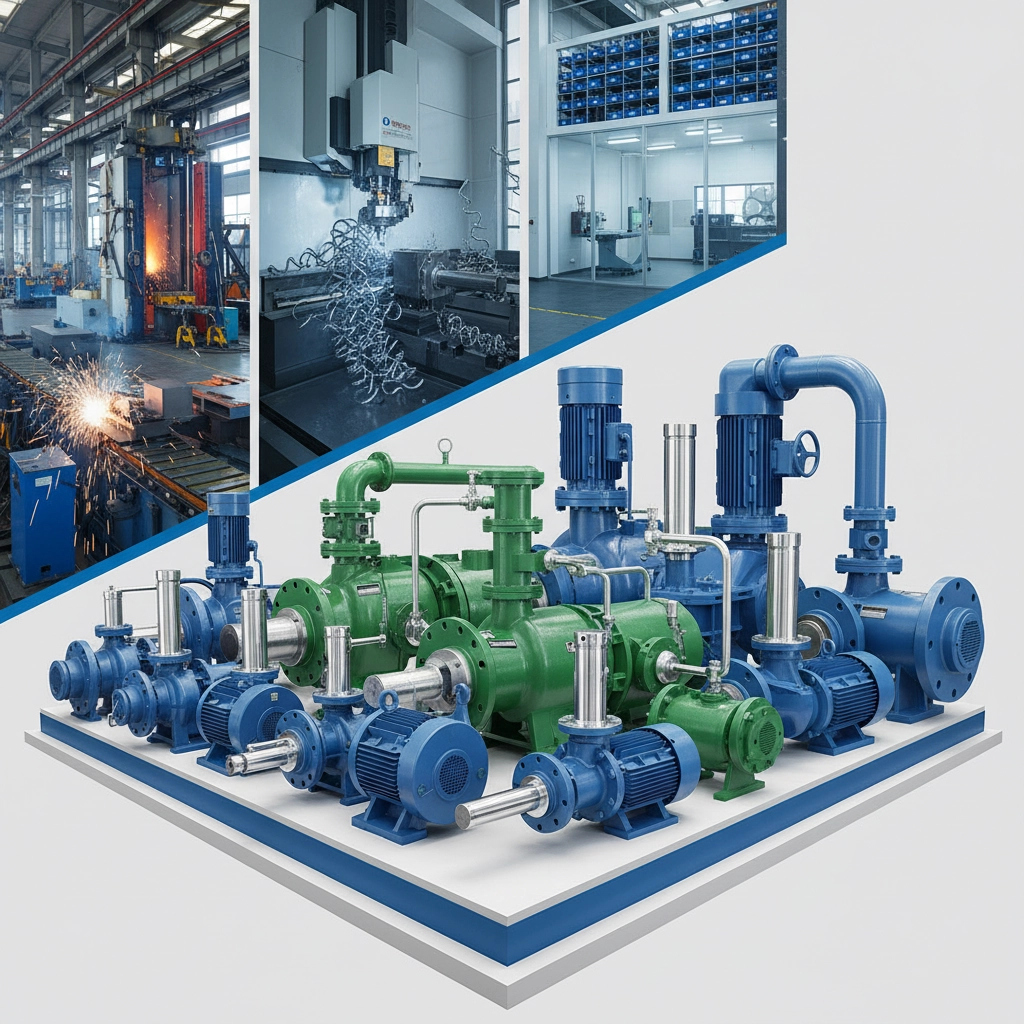
In the demanding landscape of industrial mining and dredging, the efficiency of material transport depends heavily on the reliability of your equipment. Wholesale gravel sand pump products provide the critical infrastructure needed to move abrasive solids, such as sand, gravel, and mineral slurries, across vast distances without succumbing to premature wear. By sourcing these components in bulk, industrial operators can ensure consistency in their fleet and reduce the operational downtime that often plagues large-scale extraction projects.
Global infrastructure growth, particularly in emerging economies, has led to a surge in demand for high-capacity dredging and slurry management. The challenge lies in balancing the sheer volume of material moved with the lifespan of the pump internals. Traditional pumps often fail under the abrasive stress of coarse gravel; however, modern Wholesale gravel sand pump products are engineered with advanced alloys and optimized hydraulics to tackle these precise challenges.
Understanding the nuances of slurry pump selection—from the AF Series Foam Slurry Pump for high-density tailings to the heavy-duty ZJ Series—is essential for any procurement manager. This guide explores the technical specifications, global applications, and long-term economic benefits of investing in professional-grade gravel sand pumping solutions, ensuring your operations remain sustainable and cost-effective.

Global Industry Context of Gravel Sand Pumping
The global demand for aggregates—sand and gravel—is intrinsically linked to the urbanization rates of the 21st century. As cities expand and infrastructure projects like bridges, highways, and dams proliferate, the need for efficient sediment transport has become a priority. According to industry trends aligned with ISO standards for pumping machinery, the transition toward high-chrome alloys and modular designs in Wholesale gravel sand pump products has allowed mining companies to increase throughput by up to 20% while reducing maintenance intervals.
However, the industry faces a critical problem: the aggressive nature of abrasive slurries. When pumping coarse gravel, the internal components of a standard pump can be eroded in a matter of weeks. This necessitates a strategic approach to procurement, where wholesale sourcing allows for a steady supply of interchangeable wear parts, such as impellers and liners, ensuring that the entire system does not grind to a halt due to a single component failure.
Defining Professional Wholesale Gravel Sand Pump Products
In technical terms, Wholesale gravel sand pump products refer to a specialized category of centrifugal pumps designed to handle fluids containing high concentrations of solid particles. Unlike clear-water pumps, these machines are built with reinforced housings and specialized hydraulics to prevent clogging and resist the scouring effect of minerals. They are the "workhorses" of the dredging and mining worlds, designed to move heavy solids without sacrificing flow velocity.
The "wholesale" aspect of these products is not merely about price; it is about systemic reliability. For a large-scale operation, such as a river dredging project or a gold mine, consistency across a fleet of pumps (e.g., utilizing multiple AH Series Slurry Pumps) simplifies training, spare parts inventory, and maintenance schedules. By standardizing the equipment through wholesale procurement, operators eliminate the compatibility risks associated with mixing different brands and models.
Beyond the industrial utility, these pumps serve a vital humanitarian and environmental role. They are frequently deployed in flood mitigation projects to clear silted waterways and in coastal restoration efforts to pump beach sand back onto eroding shorelines. Thus, the professional gravel sand pump is as much a tool for environmental stewardship as it is for industrial profit.
Core Engineering Factors for Pump Durability
The primary factor in the success of Wholesale gravel sand pump products is material science. To combat the extreme abrasion of gravel, manufacturers utilize High-Chrome alloys (such as 27% Cr) and natural rubber linings. The choice between a hard metal liner and a rubber liner depends on the particle size and the chemistry of the slurry; for instance, larger gravel requires the impact resistance of metal, while fine sands are often better handled by elastic rubber.
Hydraulic efficiency is the second pillar of performance. Modern Wholesale gravel sand pump products feature optimized impeller vanes that minimize turbulence and prevent the "settling" of solids within the pump casing. By maintaining a critical velocity, these pumps ensure that gravel remains suspended in the fluid, preventing the catastrophic blockages that can lead to motor burnout or casing rupture.
Finally, scalability and modularity ensure that these systems can grow with the project. Whether deploying a Vertical Slurry Pump for sump drainage or a Horizontal Slurry Pump for long-distance transport, the ability to swap out liners and impellers without dismantling the entire piping network is a key design requirement. This modular approach reduces the "Mean Time to Repair" (MTTR) and maximizes the return on investment for the end-user.
Global Applications and Industrial Use Cases
The deployment of Wholesale gravel sand pump products spans across diverse geographical and industrial sectors. In Southeast Asia and Africa, these pumps are indispensable for artisanal and industrial mining, where they transport ore slurries from the pit to the processing plant. In North America and Europe, they are more commonly seen in municipal wastewater treatment plants and dredging operations aimed at maintaining navigable shipping channels.
Consider a post-disaster relief scenario where a river has been choked with debris and silt after a major flood. Rapid-deployment slurry pumps are used to clear these waterways to prevent further flooding of residential areas. Similarly, in remote industrial zones, such as the lithium mines of South America, these pumps are the only viable way to move dense mineral brines and sands across rugged terrain where traditional conveyor belts would be impractical.
Performance Efficiency of Wholesale Gravel Sand Pump Variants
Economic Advantages and Long-Term Value
Investing in Wholesale gravel sand pump products offers a profound economic advantage through the reduction of "Total Cost of Ownership" (TCO). While a high-quality chrome-alloy pump may have a higher initial price point than a generic alternative, its lifespan is often three to five times longer. This translates to fewer replacements, reduced labor costs for maintenance, and, most importantly, the elimination of costly unplanned outages that can cost a mining operation thousands of dollars per hour.
From a strategic standpoint, wholesale procurement creates a safety net. By maintaining a localized inventory of wear parts and backup pump units, companies can shift from "reactive maintenance" to "predictive maintenance." This shift not only enhances safety by reducing the urgency and risk of emergency repairs but also builds trust with clients and stakeholders who rely on the consistent delivery of raw materials.
Future Trends in Slurry Pumping Technology
The future of Wholesale gravel sand pump products is being shaped by the digital transformation of the industrial sector. The integration of IoT (Internet of Things) sensors allows operators to monitor pump vibration, casing pressure, and motor temperature in real-time. These "Smart Pumps" can alert engineers to a thinning liner or a clogged impeller before a failure occurs, moving the industry toward a zero-downtime reality.
Sustainability is also driving innovation. New "green" materials are being developed to reduce the carbon footprint of pump manufacturing without compromising the hardness of the alloys. Furthermore, there is a growing trend toward variable frequency drives (VFDs), which allow the pump to adjust its speed based on the actual density of the slurry, significantly reducing energy consumption and wear and tear.
Automation is the final frontier. We are seeing a move toward fully automated slurry management systems where the pumps communicate with sensors in the pipeline to automatically adjust flow rates and dilution water levels. This ensures that the Wholesale gravel sand pump products always operate at their "Best Efficiency Point" (BEP), maximizing the life of the equipment.
Overcoming Operational Challenges in Sand Pumping
Despite technological leaps, operational challenges persist, most notably the phenomenon of "sand-out," where solids settle in the pipeline and create a plug. The solution lies in precise hydraulic calculation and the use of flushing systems. By strategically integrating flush water into the pump's gland seal and suction side, operators can maintain the fluidization of the slurry and protect the pump's critical seals from abrasive grit.
Another common hurdle is cavitation, which occurs when the pressure drops enough to create vapor bubbles that implode against the impeller. This can destroy a pump in a matter of days. Professional consultants recommend optimizing the Net Positive Suction Head (NPSH) and ensuring that the suction piping is as short and straight as possible, reducing the friction loss that leads to cavitation.
Ultimately, the key to success with Wholesale gravel sand pump products is a holistic approach. Combining the right hardware (e.g., the TC Series for specific heavy-duty needs) with rigorous operator training and a disciplined maintenance schedule ensures that the equipment performs at its peak for years rather than months.
Comparison of Slurry Pump Performance by Material and Application
| Material Type |
Abrasion Resistance |
Ideal Slurry Type |
Expected Lifespan Score |
| High-Chrome Alloy |
Extreme |
Coarse Gravel / Ore |
9/10 |
| Natural Rubber |
High (Elastic) |
Fine Sand / Tailings |
8/10 |
| Cast Iron |
Moderate |
Light Silt / Water |
4/10 |
| Duplex Stainless |
High (Corrosive) |
Chemical Slurries |
7/10 |
| Ceramic Liners |
Maximum |
Ultra-Hard Minerals |
10/10 |
| Composite Polymers |
Moderate |
Waste Water / Sand |
6/10 |
FAQS
The primary difference lies in the material composition and hydraulic design. While water pumps use materials like cast iron or plastic, gravel sand pumps utilize high-chrome alloys or heavy-duty rubber liners to resist abrasion. Furthermore, they feature wider clearances and specialized impeller geometries to prevent clogging from large solids, which would cause a standard pump to fail immediately.
The choice depends on the particle size and nature of the slurry. Metal liners (High-Chrome) are ideal for large, sharp particles like coarse gravel and ore, where impact resistance is key. Rubber liners are superior for fine sand and tailings, where the elastic nature of the rubber allows the particles to "bounce" off the surface, significantly extending the wear life.
Yes, provided you select the correct material. For corrosive environments, we recommend duplex stainless steel or specialized polymer coatings. Standard chrome alloys are excellent for abrasion but can be susceptible to certain acids. Always provide a full chemical analysis of your slurry to ensure the pump materials are compatible with the fluid chemistry.
The most common signs include a noticeable drop in flow rate (discharge capacity), an increase in motor amperage (indicating higher friction/drag), and excessive vibration. We recommend regular thickness testing of the liner using ultrasonic tools to predict failure and schedule replacements during planned shutdowns.
Absolutely. Wholesale procurement reduces the per-unit cost and, more importantly, ensures that you have an immediate supply of identical spare parts. In mining and dredging, the cost of a single day of downtime often exceeds the total annual cost of maintaining a comprehensive spare parts inventory sourced through wholesale channels.
A Variable Frequency Drive (VFD) allows you to match the pump speed to the actual slurry density. Running a pump at maximum speed when the slurry is thin causes unnecessary wear; conversely, running too slow causes solids to settle. A VFD keeps the pump at the optimal velocity to maintain suspension while minimizing abrasive wear on the impeller.
Conclusion
In summary, Wholesale gravel sand pump products represent more than just industrial equipment; they are the foundation of efficient aggregate transport and mineral processing. By integrating high-performance materials like High-Chrome alloys with smart hydraulic designs—seen in the AH and ZJ series—operators can drastically reduce their maintenance costs and increase operational uptime. The transition from reactive to predictive maintenance, supported by wholesale parts availability, is the key to sustainable profitability in any abrasive-heavy environment.
As the industry moves toward IoT integration and greener manufacturing, the importance of selecting a reliable, scalable pumping solution has never been higher. Whether you are managing a municipal dredging project or a remote mining operation, investing in professional-grade slurry pumps ensures that your project remains on schedule and within budget. We invite you to explore our full range of high-performance pumping solutions to optimize your industrial throughput. Visit our website: www.slurrypumpsto.com